
Jay Hutchinson’s latest exhibition at Olga Gallery continues the artist’s interest in psychogeography, the unearthing of narratives about the social life of a site through its often overlooked features.

Hutchinson has long used the symbolism of rubbish and detritus as an embodiment of the social history of a particular area. The artist embellishes found discarded objects with embroidery, raising the items from trash to a more artistic status. Using the titular six beer cans, Hutchison psychologically maps the West Harbour area of Dunedin, creating a series of small works from simple pieces of industrial archaeology.
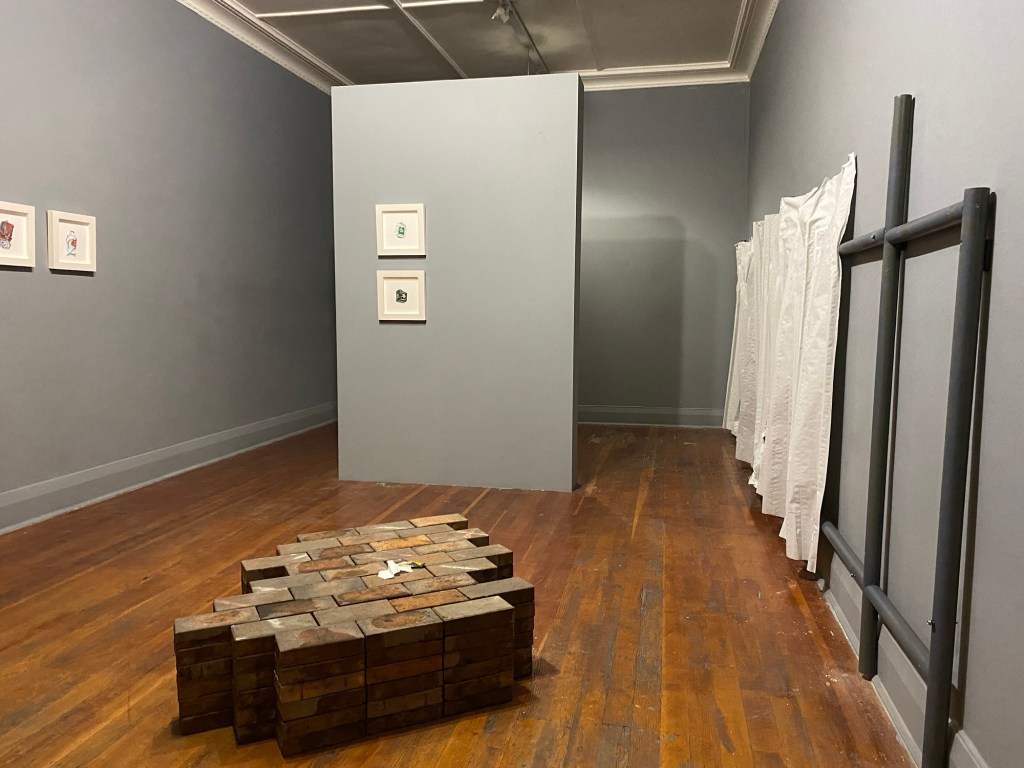
Alongside these pieces are two much larger works, both of which are closer to installation than simple mixed-media works on canvas. The newer of these is Holiday, which uses an embroidered empty cigarette packet on a stack of pavers which were taken up from George St during the central city’s recent re-landscaping. The use of these bricks freezes the item at a distinct moment in time, representing central Dunedin at a specific point in its history.

The largest work on display is the only piece not created specifically for this exhibition. Based on a damaged fence seen in a Nelson alleyway, Untitled Nelson Landscape May 2019 painstakingly recreates the fence dent by dent using embroidered cotton sheets over a timber frame.
 a gallery presents