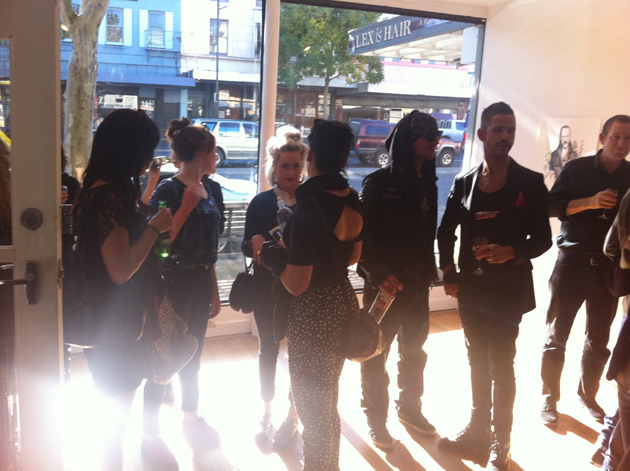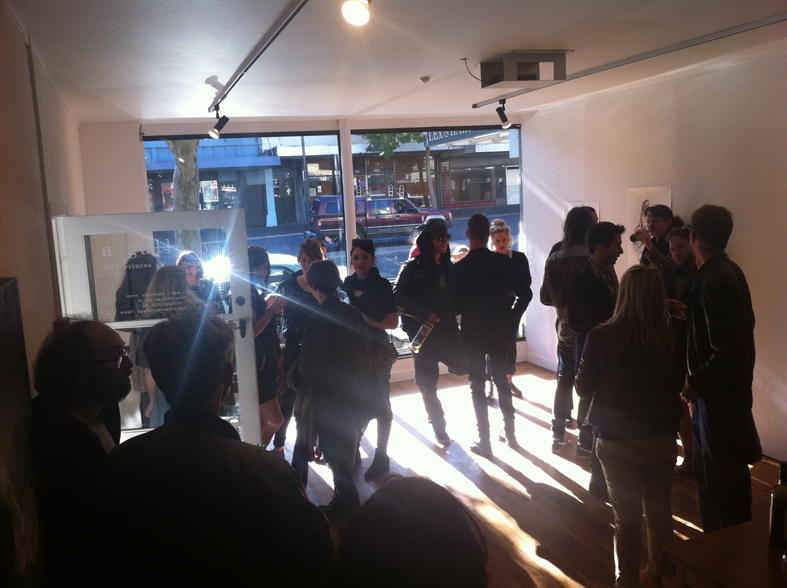
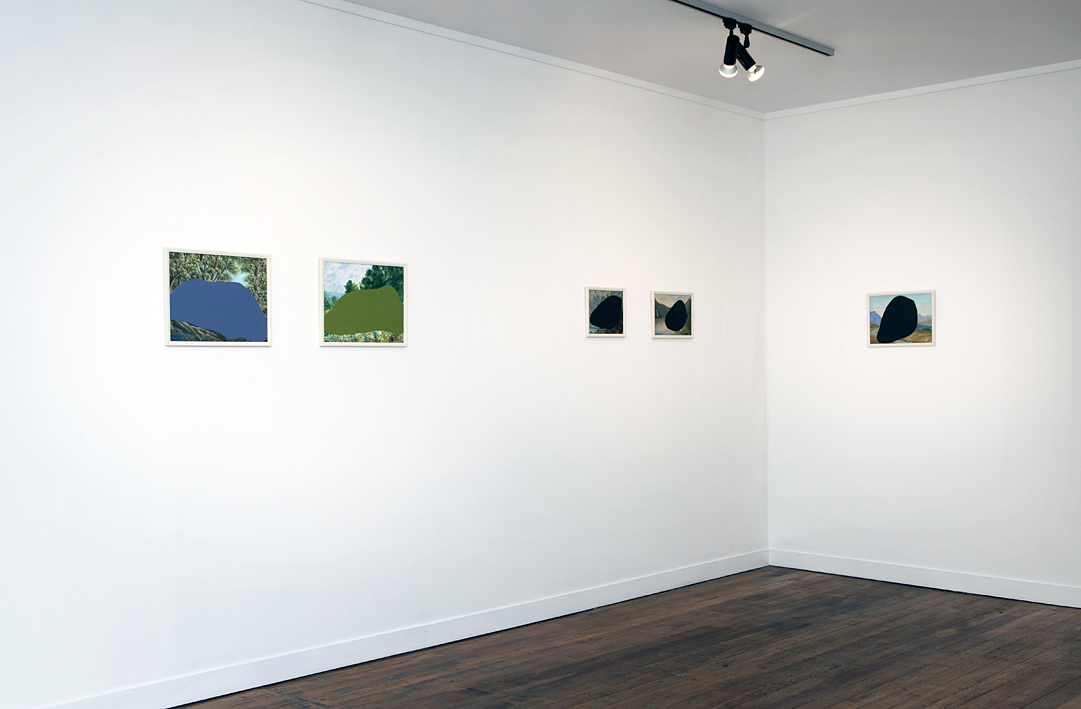
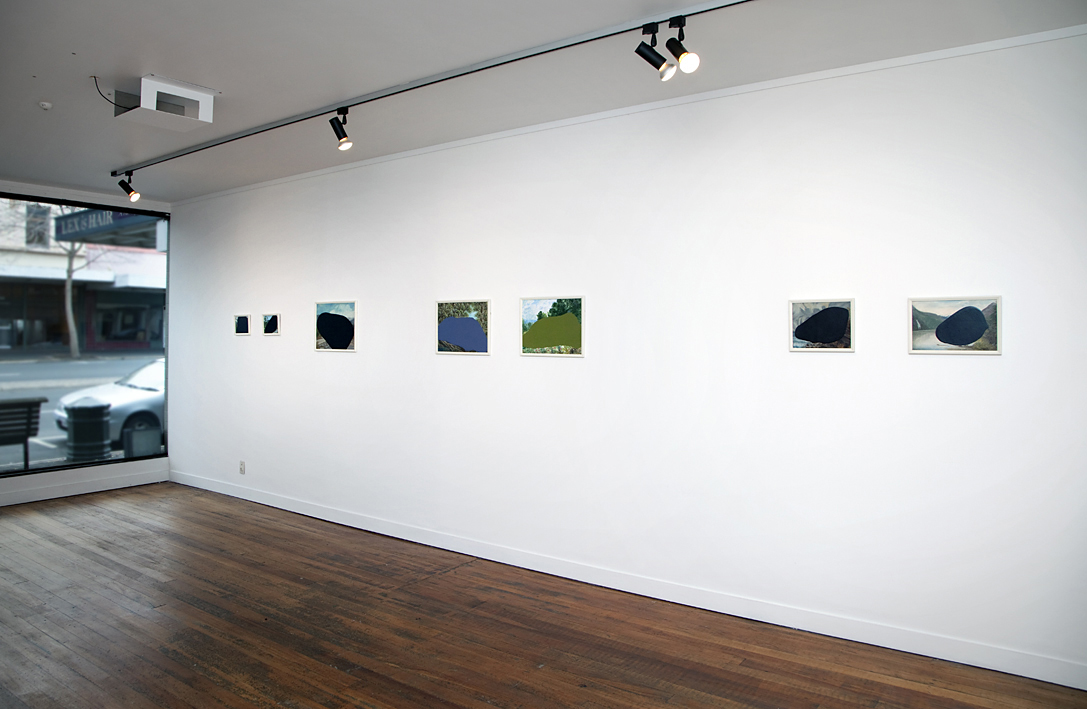


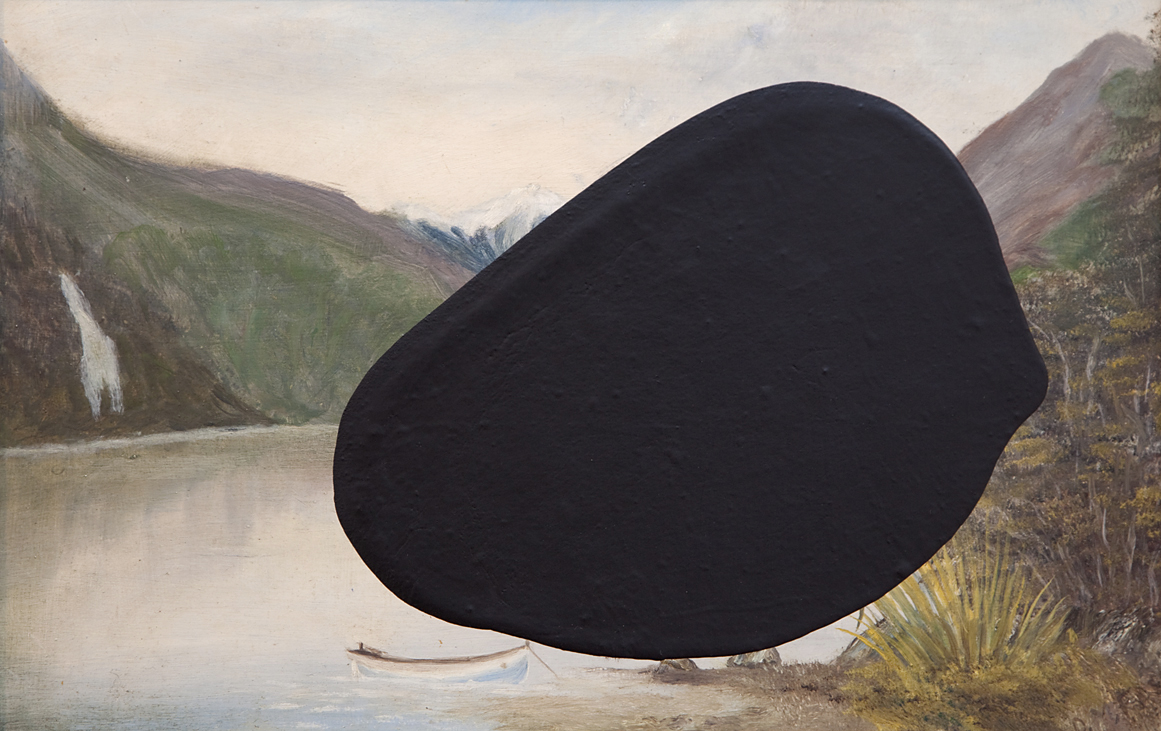

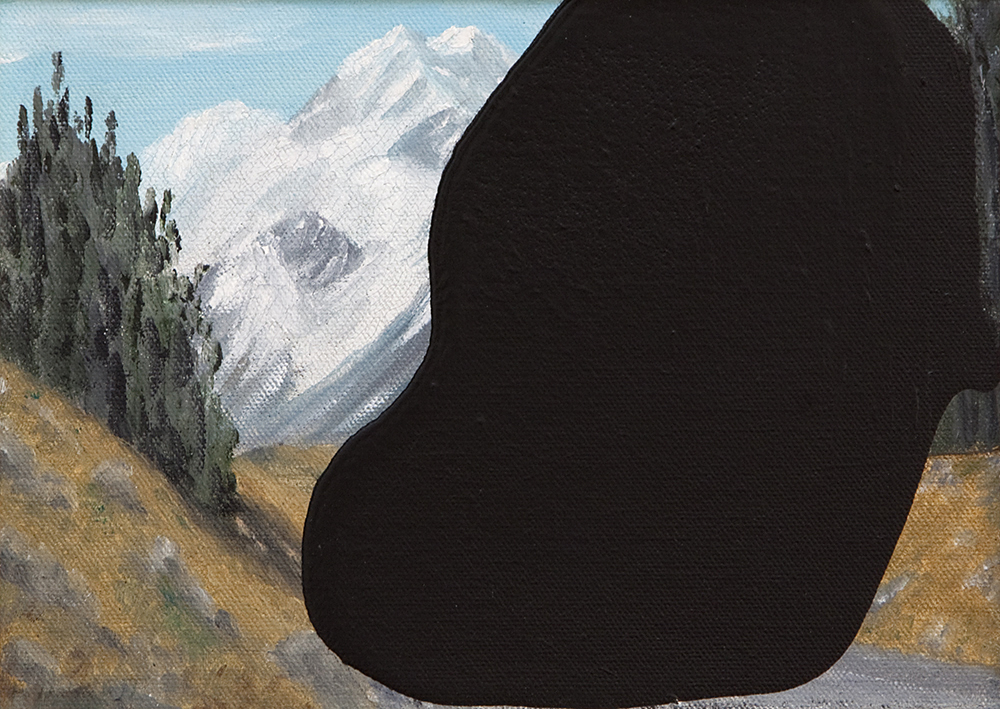

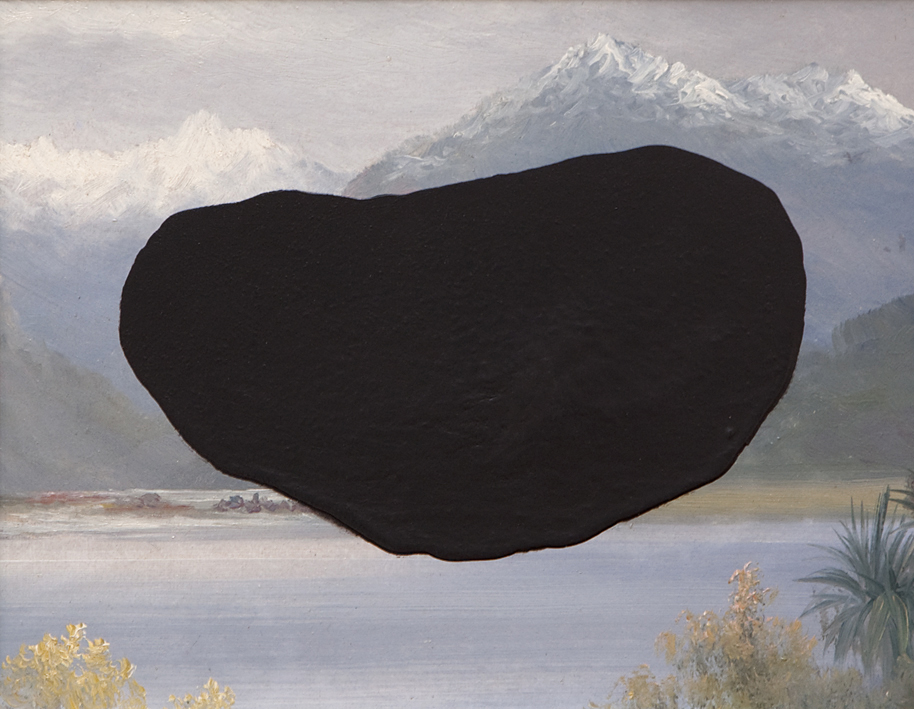


The polished floorboards of A Gallery are competing with the working matter of Dunedin-raised artist Philip James Frost. Rather than exhibiting paintings, Frost is displaying the guts of his studio, causing that age-old question regarding what makes art “art” to be vanquished by the cohesion of process and product. Books, drawings, magazines, paintings, a palette and the occasional lighter are in layers across the floor, but far from being the chaos known to make obsessive types twitch, this is (to the artist’s eye at least) an organised mess. Taking four hours for him to (re)create, the display is delicately individual; it provides curious insight to both the artist’s musings and his methodology. What may be perceived as an intriguing array of chewed-up-and-spat-out imagery is, in practice, an operative arrangement of ideas; a cocktail of resources so essential to Frost’s creativity that he arrived at the weekend to retrieve a few from the display. Significantly, it was curator Jay Hutchinson who saw the artistry of Frost’s working-matter, and it was through no self-aggrandisement that the artist (eventually) agreed to display it. Rather, and in an absorbing conceptual twist, this downward expulsion of the artist’s mind might well be taken as Hutchinson’s exhibition of Frost, or alternatively, an expose of the life-art continuum.
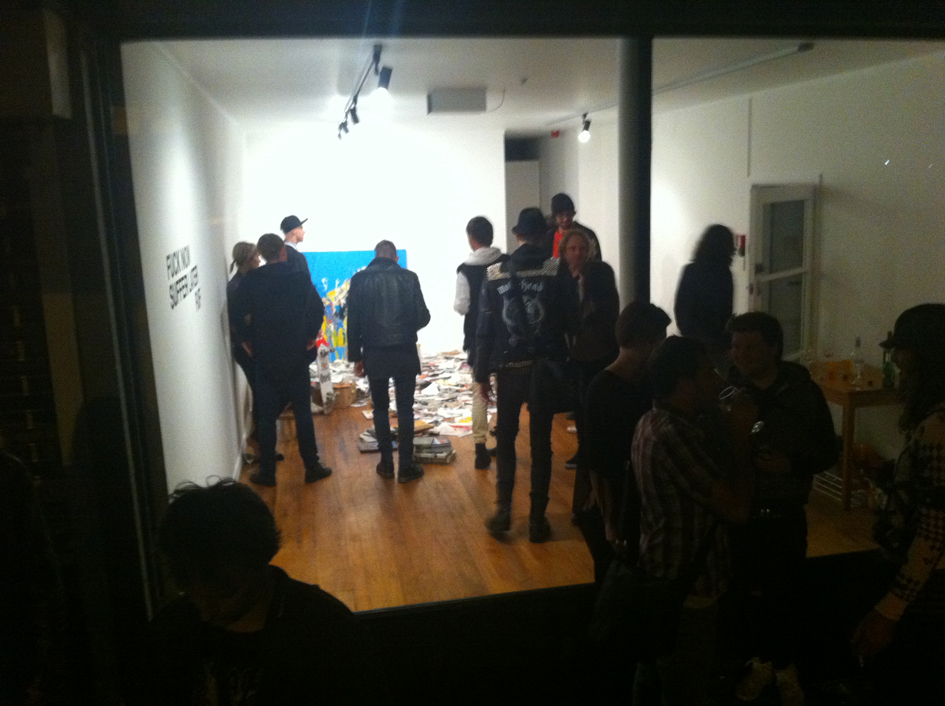
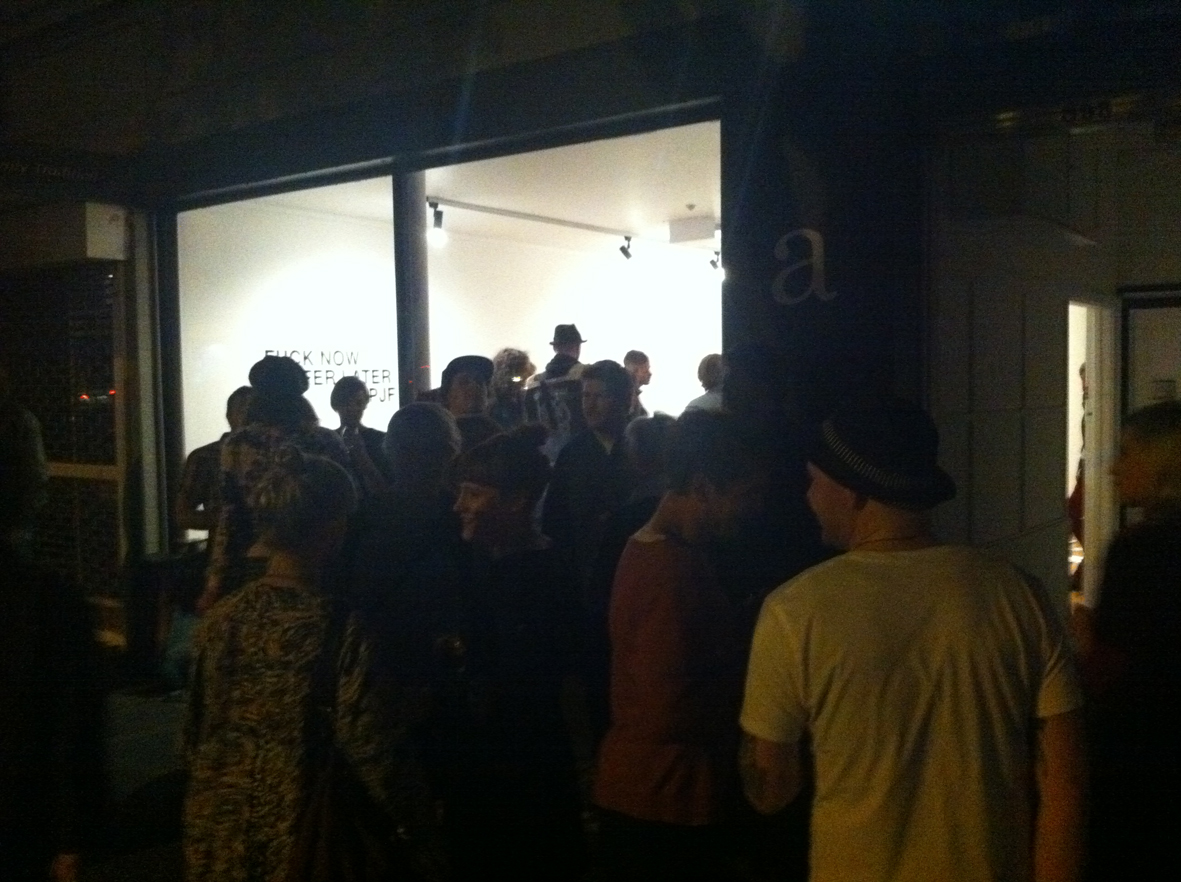


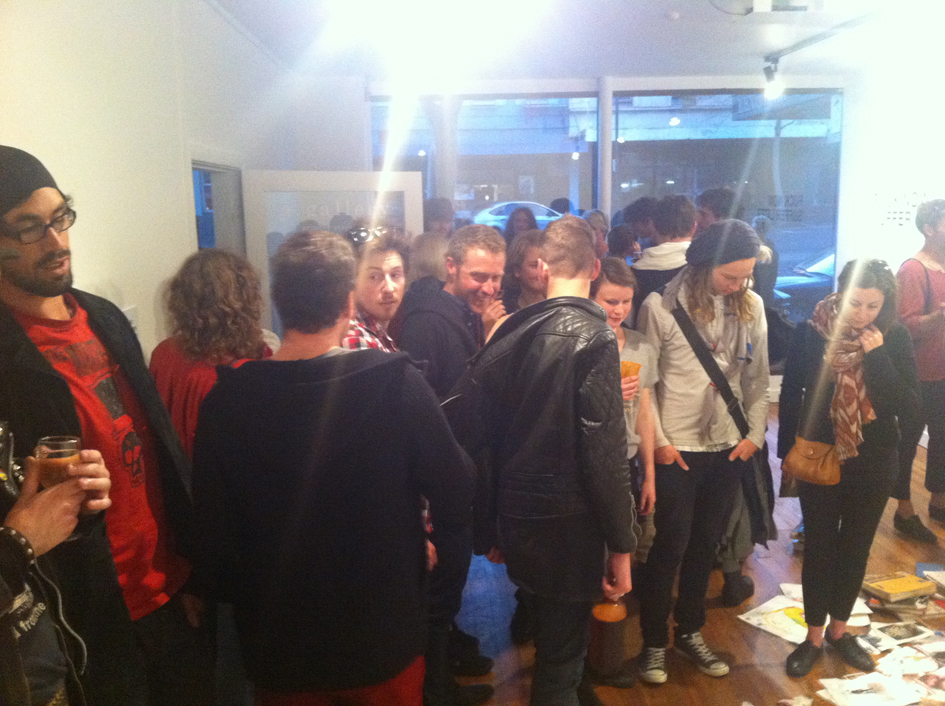


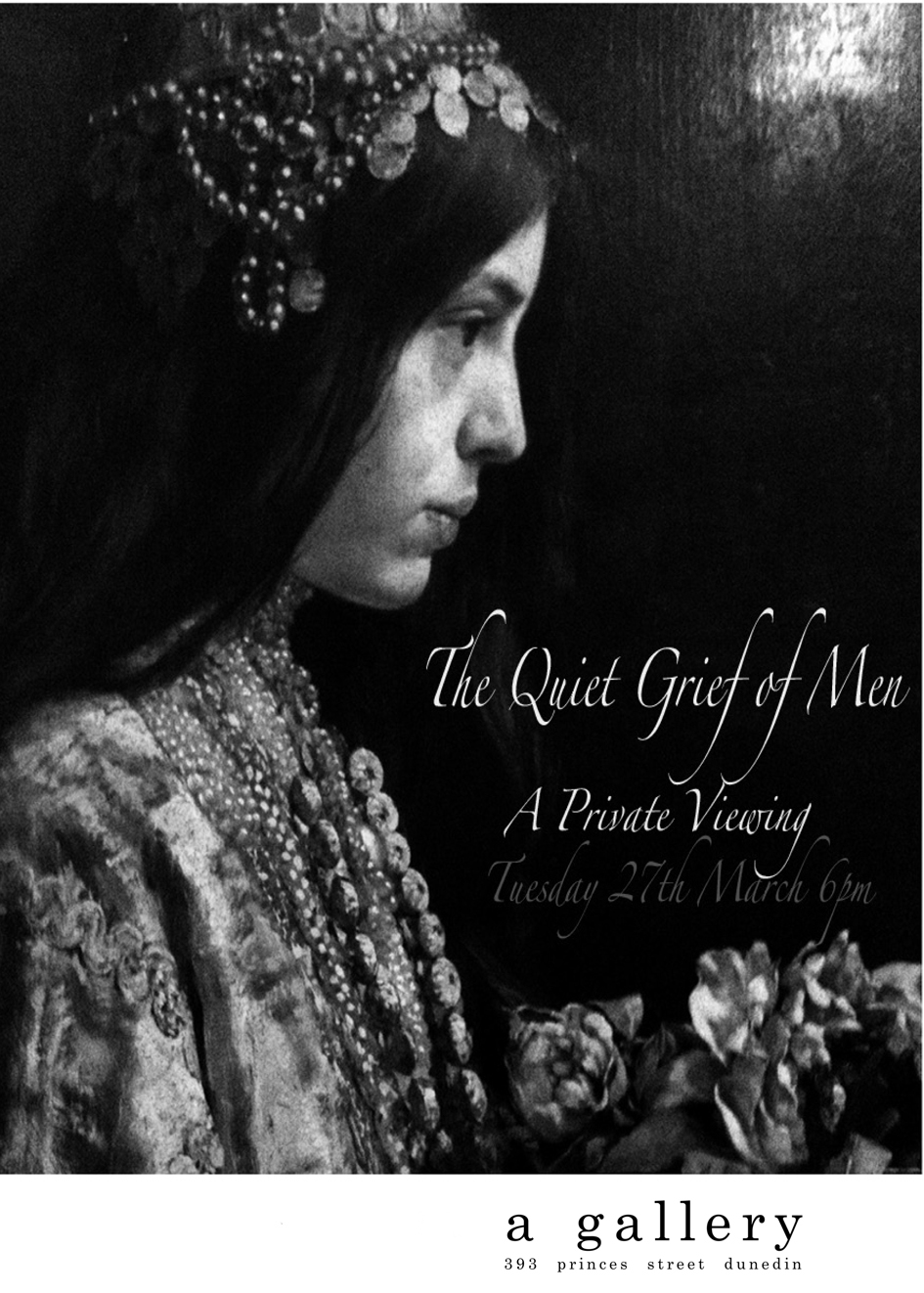
a gallery presents Auckland based, Dunedin born photographer Neil Satori in a special ONE NIGHT ONLY photography exhibition and screening, The Quiet Grief of Men, at a gallery 393 Princes street on Tuesday 27th March at 6pm …
Not afraid to explore the personal and the intimate in his photography, Neil Satori’s primary influence has been a series of workshops held at AUT University since 2006 featuring French photographer Antoine D Agata, Dutch photographer Rineke Dijkstra, Paul Graham and American photographers John Gossage, Alex Soth, Lewis Baltz and Todd Hido.
“I was influenced by what those photographers had in common, each of them an empathy with the human condition and I was encouraged by South African photographer Pieter Hugo (Nollywood) and Quentin Bajac, Chief Curator of Photography at the Centre Pompidou in Paris to publish images I’d shown at the workshop earlier this year. I’m delighted to be doing this in Dunedin for the first time, it’s a discerning audience”. Neil Satori
The Quiet Grief of Men will be a New Zealand entrant in the Dummy Book Awards for unpublished photographic books at the 5th International Fotobook Festival in Paris in April.
In the weekend, suddenly struck by a sense of having spent too much time working, and not enough time living, I decided to get amongst it all for a couple of days. I had some pretty big nights in the process and was in bed by 8.30pm on Sunday, but it was worth it.
Along the way, on Saturday night, I decided to get my Harry Smith on, and do some proper field research. In layman’s terms, this means shut the f^&k up and let the new people you’ve just met school you on their world, and their frame of reference. As a result, I was introduced to the art of Dunedin’s Jay Hutchinson, which viewed under the same light as my recent post about UK visual artist Christopher Labrooy, seems to form a continuum of sorts.
Academically decorated with a Masters from the Dunedin school of Art, Hutchinson currently runs a gallery down there called, somewhat hilariously A Gallery. Initially described to me as a tattooed punk hip-hop kid, and then a Jack Johnson style singer songwriter, I suspect he is quite the character. The descriptive language used about him, and the enthusiasm people spoke of him with lead to me, come Monday, getting my google on.
What I discovered was a series of works which speak on a multiplicity of levels, or as NZ Style Collective put it, “Through a meditative, labour intensive process Dunedin artist, Jay Hutchinson creates works which combine a delinquent nostalgia with a thoughtfully articulated conceptual backbone.”
To cut to the chase, he creates pieces which on first glance look like everyday school books, all tagged up by a bored (possibly stoned) teenager, who may or may not also indulge in in-class fingerboarding, and maybe even hiding iPod buds in their ears under impressive dreadlocks. On closer inspection though, it turns out that his classically adolescent book graffiti, has actually been painstakingly hand stitched onto digitally printed silk.
As you’re probably realising, this theoretical framework f^&ks with convention heavily. It suggests age reversals, gender role reversals, and blurs the line between fine and street art. In this thing we call life, nothing is every really concretely one or the other, it’s always a lot of this and a little of that, or visa versa. Hutchinson’s work holds a candle to this dualism and we should salute him for it.
You can view a gallery of his works to the left. Afterwards, check out the website for A Gallery below.
Michelangelo Merisi da Caravaggio was an Italian artist of the 16th and 17th centuries. He was of great influence to the baroque period in art history and has been said to have put “the oscuro (shadows) into chiascuro”.
Renowned in the art world for his psychological realism, dramatic use of lighting and more broadly for his “disorderly” lifestyle, Caravaggio had a reputation as something of a ruffian that has outlived him, making him the reference point for a group of male artists here.
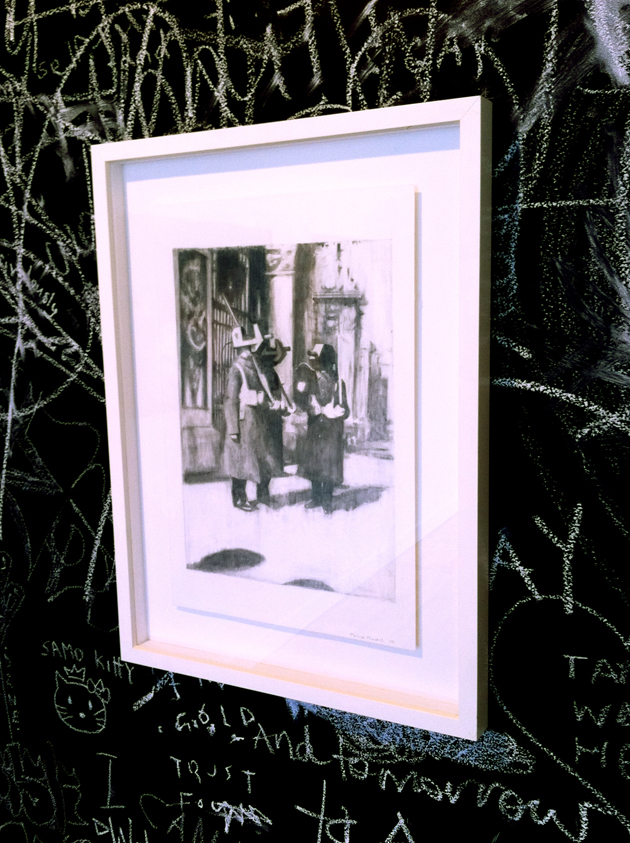
Local artists Craig Freeborn, Danny Brisbane, Flynn Morris-Clark, James Colin Bellaney and Philip Madill are all either near-graduates, graduates, or masters of fine art respectively, and this exhibition is tied together by their mutual fixation on darker – that is, perceptively sceptical – realist themes. To say “realist” is not to suggest a stylistic trend. The works, with each artist presenting one or two pieces, range from Bellaney’s ostensibly abstract expressionist method, Madill’s punctilious, eerie (quasi-futurist) works in graphite and Freeborn’s thrilling acrylic portrayal of dumpster-diving through to Morris-Clark’s compelling, fleshy oil portraits and Brisbane’s graphic renditions of pop-culture icons.
There is no lack of talent, energy, or originality among these artists and this exhibition reveals only a glimpse of their creative facility.